It’s not just about saving stories: How organizing family memories brought us closer
Have you ever tried to share a family story, only to realize the details are slipping away? I felt the same—until I started organizing our memories with simple tech tools. It wasn’t about creating a perfect archive; it was about reconnecting. Now, my aunt laughs at old recordings, my kids ask for “grandpa’s stories” at bedtime, and scattered moments have become a shared family thread. This is what happens when technology meets love, one organized memory at a time.
The Moment I Realized Our Stories Were Fading
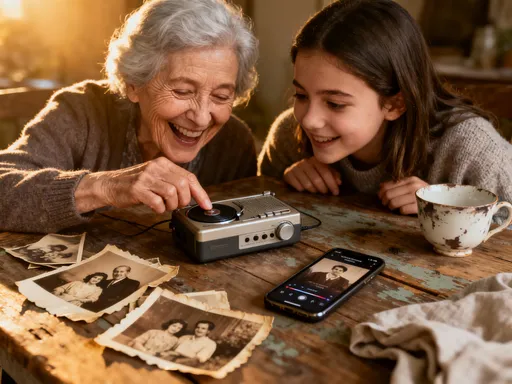
It happened on a quiet Sunday afternoon, the kind where sunlight spills across the kitchen table and time feels like it’s moving slower than usual. I was visiting my mother, and we were flipping through an old photo album—one of those thick, vinyl-covered books with yellowing pages and sticky corners. She paused on a picture of my grandfather standing beside a rusted tractor in front of our old farmhouse. “Do you remember this?” she asked softly. I nodded, but when she began to tell the story behind it—how he’d bought that tractor with his first paycheck and taught me to drive it when I was ten—her voice trailed off. “I can’t quite recall what he said that day,” she admitted. “It felt important at the time.”
That moment stayed with me. It wasn’t the first time I’d noticed a story slipping through the cracks, but it was the first time I truly felt the weight of it. Memories weren’t just fading—they were unraveling. And they weren’t just hers. I realized I had voice notes on my phone from holiday calls with my uncle, blurry videos of my daughter’s first steps, and hundreds of photos buried in folders named “DCIM_001” or “IMG_2347.” None of it was organized. None of it was easy to find. And because of that, none of it was really alive.
What struck me most was that this wasn’t about love. Our family has always been close. We care deeply about each other. But caring doesn’t automatically preserve stories. Without a way to hold onto them—without a system—our history was quietly disappearing. It wasn’t dramatic. There was no single loss that broke us. It was a slow fade, like a photograph left in the sun. And that realization hit me hard: if we didn’t do something soon, the next generation wouldn’t just miss the details—they’d miss the connection.
Why “Just Save It” Isn’t Enough
We’ve all been told to save our memories. Take photos. Record the moments. Back up your files. And we try. We snap pictures at birthdays, graduations, and Sunday dinners. We record our parents’ voices when they tell stories. We promise ourselves we’ll “go through them later.” But later rarely comes. And when it does, we’re faced with a digital jungle—thousands of unsorted images, voice memos with no context, videos with missing sound or broken links.
I remember one Mother’s Day when I wanted to show my kids a video of me as a little girl, singing a silly song for my mom. I knew I’d recorded it on my phone years ago. But after 20 minutes of scrolling through my camera roll, searching keywords like “mom,” “song,” “old,” I gave up. The memory was there, somewhere, but it might as well have been lost. That’s when I realized: capturing a memory isn’t the same as keeping it. It’s like catching fireflies in a jar—if you don’t open the lid carefully, they fly away before you can share them.
And it’s not just about access. It’s about emotion. A photo of your dad holding your newborn child means so much more when you can hear his voice saying, “She has your eyes.” But if that audio file is buried in a folder called “Voice Memos_Backup_2018,” and you can’t find it when your child asks, “What did Grandpa say when he first saw me?”—the moment loses its power. The feeling fades. The connection weakens. Technology was supposed to help us remember, but without organization, it was actually making us forget faster.
I started to see that the real issue wasn’t the number of devices or apps we used. It was the lack of intention. We were saving things, but not with a plan. We weren’t thinking about who would want to see them, when they’d want to see them, or how easy it would be to find them. And that’s what changed everything for me: understanding that organization is an act of love. It’s how we make sure the people we care about can actually experience the memories we’ve saved.
Finding the Right Tools—Without the Tech Stress
When I first decided to get serious about organizing our family memories, I made the classic mistake: I went looking for the “perfect” system. I downloaded apps with timelines, tagging features, facial recognition, and automatic sorting. I spent hours reading reviews and watching tutorials. And then I opened one and felt completely overwhelmed. The interface looked like a spaceship control panel. I closed it and didn’t touch it for weeks.
That’s when I reminded myself: this wasn’t about becoming a tech expert. It was about making things easier for my family. So I started simple. I asked myself, “What tools do I already use? What feels natural?” I realized I already had everything I needed—my phone’s voice memo app, Google Drive, and a shared photo album on iCloud. No downloads. No passwords. No complicated setup.
The biggest breakthrough came when I stopped trying to do everything at once. Instead of organizing 10 years of photos in one weekend, I started with one memory: a recording of my father telling the story of how he and my mom met. I saved it in a folder called “Family Stories” on Google Drive, and I named the file clearly: “Dad_MomFirstMeeting_1975.mp3.” Then I shared the folder with my siblings. That was it. No fancy editing. No captions. Just a clear name and a safe place.
What surprised me was how much that small step changed things. My sister listened to the recording that night and called me in tears. “I’d never heard that part before,” she said. “I had no idea Mom was so nervous on their first date.” That conversation sparked a chain reaction. She started adding her own recordings. My brother uploaded old family videos from his laptop. We weren’t building a museum—we were building a living collection, one small, easy step at a time.
The lesson? Simplicity wins. The tools don’t have to be advanced. They just have to be used. And for that, they need to feel doable. If a system requires too much effort, people won’t stick with it. But if it’s as easy as pressing record or dragging a file into a folder, it becomes part of everyday life. That’s how technology stops feeling like work and starts feeling like help.
Turning Chaos into Connection: Our Family’s System
Over time, what started as a personal project became something much bigger: a shared family practice. We didn’t set out to create a formal system, but one naturally grew from what worked. Today, our memory-keeping looks simple, but it’s incredibly powerful. We use themed folders in Google Drive—“Holidays,” “Childhood Stories,” “Recipes,” “Family Trips,” “Voices of Our Elders.” Each one acts like a chapter in our family book.
Every Sunday, I send a quick message to our family group chat: “Voice check-in time!” It’s not a demand—just an invitation. Anyone can record a short message about their week, a memory that came up, or something they’re grateful for. My nephew, who’s 14, started doing it during summer break and now it’s his favorite thing. “It’s like leaving a note for the future,” he said once. Last month, he recorded himself playing the piano and titled it “For Grandma, who taught me this song.” I saved it in the “Music & Moments” folder. It’s not just a recording. It’s a gift.
One of the most beautiful developments was when my cousin began adding her mother’s handwritten recipes. She scans them, names the files clearly—“Aunt Maria_PastaSauce_Recipe_1968”—and uploads them. Now, when we cook her famous sauce, we don’t just follow steps. We hear her voice in the background, telling us to “add a little more basil, just like Mama did.” The recipe isn’t just food—it’s a thread connecting four generations.
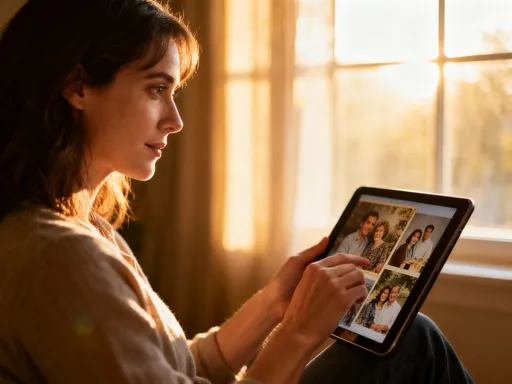
And it’s not just about adding new memories. We’ve also started revisiting the old ones. During a school break, my nephew spent an afternoon going through a folder of scanned photos from the 1980s. He didn’t just look at them—he labeled them. “Me at the lake, age 3,” “Grandpa’s garden, summer 1989,” “Christmas at Aunt Carol’s.” He shared them back with the family, and suddenly, those blurry images had names, dates, and stories. What was once chaos became connection.
This system works because it’s flexible. It’s not rigid. It doesn’t require perfection. If someone forgets to name a file right, it’s okay. If a video is shaky or the audio is soft, it still matters. The goal isn’t a flawless archive—it’s a living, breathing collection that grows with us. And because it’s easy to use, more people join in. That’s the real win: when memory-keeping becomes a shared act of love.
When Technology Sparks Real Conversation
The true magic of this journey didn’t happen when I pressed “save” or “upload.” It happened when someone pressed “play.”
Last winter, I shared a recording of my father telling the story of his first job—delivering newspapers at 5 a.m. in the snow. I didn’t think much of it at the time. But my oldest daughter listened to it before bed and came downstairs the next morning with questions. “Did Grandpa really walk six miles every day?” she asked. “Did he ever fall?” I didn’t know all the answers, so I called my dad. That phone call turned into a two-hour conversation. He told us about the dog that used to follow him, the baker who gave him a roll on cold mornings, the neighbor who waited at the window to make sure he made it home safe. My daughter recorded parts of it and added it to the folder as a follow-up. That one memory sparked a whole new chapter.
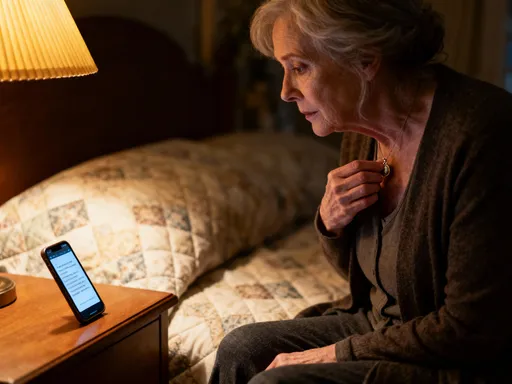
Another time, my cousin played a recording of her mother singing a lullaby in Italian—the same one she sang to my cousin when she was little. My aunt, who is in her 80s and doesn’t use smartphones much, heard it during a family video call. She started crying. “I haven’t heard that voice in years,” she said. “It’s exactly how I remember her.” In that moment, the technology disappeared. What remained was pure emotion—grief, love, remembrance, joy. It wasn’t about the file or the app. It was about the human connection it made possible.
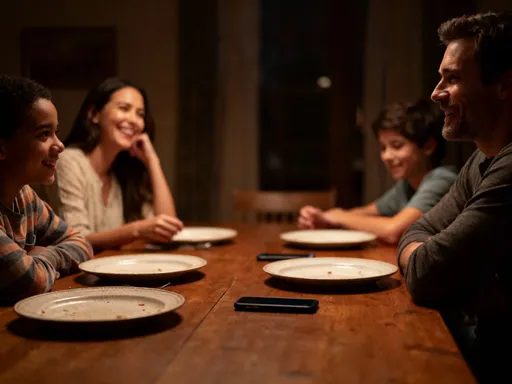
These moments have become more frequent. A photo of a childhood home leads to a discussion about what it was like to grow up in that neighborhood. A recording of a family argument from years ago becomes a chance to apologize and heal. A video of a long-gone pet brings laughter and tears at a family dinner. The organized memories aren’t just stored—they’re active. They invite conversation. They bridge gaps. They help us understand each other better.
What I’ve learned is that technology, at its best, doesn’t replace human connection—it enables it. A well-organized memory is like a door. It doesn’t force anyone to walk through, but it makes it easy to open. And when someone does, they often find more than a story. They find a piece of themselves.
Protecting What Matters—Privacy, Simplicity, and Care
As our collection grew, I started thinking more about safety. These aren’t just files—they’re pieces of our hearts. So I made sure we had simple but strong practices in place. We use password-protected shared folders, and only family members we trust have access. We back up everything to two places: Google Drive and an external hard drive stored at my sister’s house. It’s not about being paranoid—it’s about being prepared.
We also talk about what should stay private. Not every story belongs in the folder. A heartfelt message meant for one person, a painful memory still too raw to share, a moment of anger or grief—those we keep to ourselves, and that’s okay. I’ve learned that respecting boundaries is part of honoring memories. Just because we can save everything doesn’t mean we should.
We also keep it simple. No complicated permissions. No endless tagging. We use clear folder names and consistent file naming so anyone—my 75-year-old mom, my 10-year-old niece—can find what they’re looking for. If a system is too hard to use, people won’t use it. And if they don’t use it, the memories stay locked away.
Most importantly, we approach this with care. We don’t rush. We don’t force anyone to participate. If someone isn’t ready to share a story, we wait. If a recording brings up hard feelings, we talk about it. This isn’t just about technology—it’s about trust. And trust is built slowly, with kindness and patience.
More Than an Archive—A Legacy We Build Together
Looking back, I realize this journey was never really about saving the past. It was about enriching the present. By organizing our memories, we didn’t just preserve stories—we created new ones. We found reasons to call each other. We discovered parts of our family we’d never known. We laughed, we cried, and we listened—really listened—in ways we hadn’t in years.
My kids now grow up knowing their grandparents’ voices, their ancestors’ traditions, and the small, beautiful moments that shaped our family. They don’t just hear about “the old days”—they experience them. And when they add their own recordings, their own photos, their own stories, they’re not just preserving history. They’re becoming part of it.
This is what happens when technology is used with purpose. It’s not about the latest app or the highest resolution. It’s about making space for what matters—love, connection, identity. We didn’t need a perfect system. We just needed a starting point, a little consistency, and a lot of heart.
So if you’ve been thinking about organizing your family memories but feel overwhelmed, I’ll say this: start small. Record one story. Save one photo in a clearly named folder. Share it with one person. You don’t have to do it all at once. You just have to begin.
Because in the end, it’s not about creating a flawless digital museum. It’s about keeping the thread alive. It’s about making sure that when someone asks, “What was Grandma like?” or “How did you and Grandpa meet?”—there’s an answer. Not just words, but a voice. Not just a date, but a feeling. That’s the legacy we’re building. Not with grand gestures, but with small, loving acts—organized, shared, and kept close. This is technology at its most human. And it’s available to all of us, one memory at a time.