From Passive to Proactive: How Volunteer Apps Transformed My Learning Mindset
Have you ever felt stuck in a rut, knowing you should learn more but not knowing how to start? I was once overwhelmed, disconnected, and mentally stagnant—until I began using simple volunteer coordination apps. What started as a way to give back quietly reshaped how I absorb knowledge, stay curious, and grow. This isn’t just about technology; it’s about rediscovering the joy of learning through real human connection and purposeful action. It’s about finding meaning not in flashy certificates or endless webinars, but in showing up for someone else—and realizing, along the way, that you’re also showing up for yourself.
The Burnout That Changed Everything
For years, I thought learning meant effort—hard, exhausting effort. I’d sit through online courses after putting the kids to bed, eyes straining against the glow of the screen, trying to absorb bits of information about time management, digital tools, or parenting strategies. I’d save articles with good intentions, only to let them gather digital dust in my bookmarks. The pressure to 'keep up' was real. Everyone seemed to be leveling up—learning new skills, launching side hustles, speaking confidently about things I’d never heard of. And there I was, stuck in the same cycle: watch, forget, feel guilty, repeat.
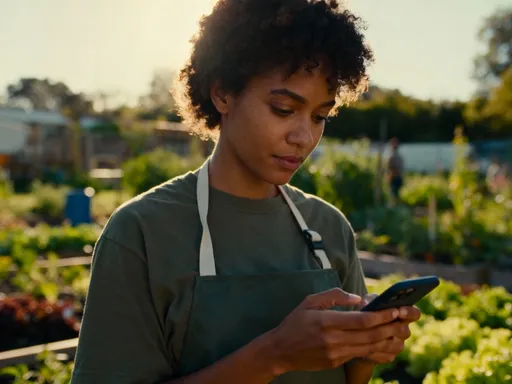
My mind felt cluttered, not enriched. I wasn’t retaining anything, and worse, I wasn’t enjoying it. Learning had become another chore, like folding laundry or answering emails. I stopped feeling curious. I stopped asking questions. I just wanted to survive the day. One evening, after yet another fruitless hour of scrolling through videos I wasn’t even listening to, I saw a small notification pop up on my phone. It was from a volunteer app I had downloaded months ago and forgotten about. The message read: 'Local schools need online tutors for middle school math. No experience required—just willingness to help.'
I almost swiped it away. I wasn’t a math person. I hadn’t done long division in years. But something about the simplicity of the request—just show up, be present, help one kid—felt different. It didn’t ask me to be perfect. It didn’t demand a certification or a polished resume. It just asked me to try. So I clicked 'Sign Up.' That small act didn’t feel like a turning point at the time. But looking back, it was the first real breath of fresh air my mind had taken in years.
Discovering Purpose in Small Acts
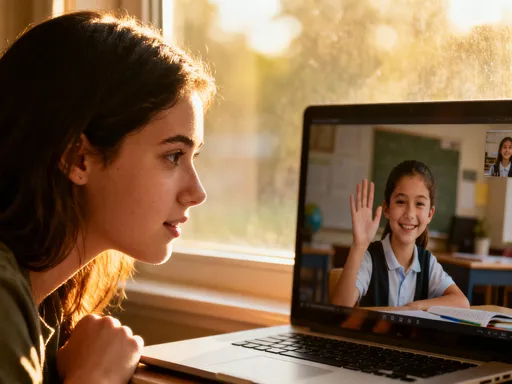
The first session was awkward. I was paired with a 12-year-old named Jamal through a secure video link hosted by the app. He was polite but clearly unsure about this stranger trying to teach him fractions. I was nervous too. I opened my notebook, cleared my throat, and said, 'So… how about we start with something simple?' What followed was not a flawless lesson, but it was real. I stumbled through explanations. I had to pause and think. I even Googled a quick refresher on equivalent fractions while Jamal patiently waited.
But here’s what surprised me: I cared. I wanted Jamal to understand. I wasn’t doing this for a grade or a completion badge. I was doing it because he was right there, asking questions, and I could see the moment something clicked in his eyes. That moment—that tiny spark of understanding—lit something in me too. I went home that night and looked up fraction games, found a few fun videos, and even practiced explaining the concept to my daughter over dinner. I wasn’t studying to pass a test. I was learning to be better for someone else.
And that changed everything. Purpose became my teacher. When you’re learning to help someone, not just to check a box, your brain pays attention differently. You remember more. You dig deeper. You start asking, 'Why does this work?' instead of just 'What’s the answer?' I began spending 20 minutes before each session brushing up on the topic, not because I had to, but because I wanted to show up prepared. My curiosity, long buried under to-do lists and self-doubt, began to reawaken. I wasn’t just giving time—I was growing in ways I hadn’t expected.
How the Right App Made It Effortless
Now, I’ll be honest—I’ve tried other apps before. Some were clunky, with endless forms and confusing interfaces. Others demanded too much: full-day commitments, background checks, in-person training. I’d sign up, feel excited for a day, and then let life get in the way. But this one was different. The volunteer platform I used—widely available and trusted by community organizations—was designed with real people in mind. It didn’t assume you had hours to spare. It didn’t overwhelm you with options.
After a quick onboarding process, I filled out a simple profile: my interests (education, youth), my availability (Tuesday and Thursday evenings), and my comfort level (beginner-friendly subjects). Within hours, I was matched with opportunities that fit my life. The app sent a gentle reminder the day before each session, shared a secure link for the video call, and even provided basic lesson outlines for tutors who needed them. After each session, I could log my hours with one tap. No paperwork. No follow-up emails. Just a quiet sense of accomplishment.
But what really won me over was how the app began to suggest learning resources based on my volunteering. After a few math sessions, it recommended a free online course on 'Teaching Math Concepts Simply'—not because I was required to take it, but because it thought I might find it helpful. I clicked on it out of curiosity and ended up completing the whole thing over a weekend. The app didn’t push me. It supported me. It felt less like a tool and more like a thoughtful friend who knew what I needed before I did. Technology, for once, wasn’t stealing my attention—it was giving it back, focused and meaningful.
Learning by Doing, Not Just Watching
We’ve all been there—watching a 10-minute video on how to do something, feeling like we’ve 'learned' it, and then freezing when it’s time to actually do it. That’s the gap between passive consumption and real understanding. Volunteering closed that gap for me. Teaching isn’t just about knowing—it’s about explaining, adapting, and responding in real time. And that kind of active engagement is one of the most powerful ways to learn.
Take science, for example. I wasn’t confident in it, but when a group of teens asked if I could help with a climate change project, I said yes. I spent the week researching—reading articles, watching short documentaries, even revisiting my old high school notes. But the real learning happened during our sessions. When one girl asked, 'Why does CO2 trap heat?' I had to break it down in a way a 13-year-old could grasp. I used simple analogies—like a blanket trapping warmth—and checked in: 'Does that make sense?' Their questions pushed me to go deeper. I wasn’t memorizing facts. I was building understanding, piece by piece, through conversation.
And because the stakes felt real—these kids were counting on me—I paid attention. I remembered more. I stayed curious. I even started reading science newsletters for fun. That shift—from passive watcher to active participant—rewired my brain. I wasn’t just absorbing information anymore. I was using it. And when you use knowledge, it sticks. The app didn’t teach me science. My students did. The technology just made it possible for us to connect, share, and grow together.
Building Confidence Through Contribution
There’s a quiet magic in being needed. When Jamal texted me before a test to say, 'I feel ready—thanks to you,' something shifted inside me. I wasn’t just a volunteer. I wasn’t just a learner. I was someone who made a difference. That sense of contribution did more for my confidence than any online course ever could. I started seeing myself differently—not as someone behind, but as someone with something to offer.
That new self-image spilled over into other areas. I began participating in online parenting forums with more confidence, sharing tips and asking thoughtful questions. I joined a local book club and actually spoke up during discussions. When a neighbor mentioned her daughter was struggling with reading, I offered to help, using some of the strategies I’d learned through the app’s literacy resources. I even started mentoring a new volunteer on the platform, guiding her through her first sessions.
Each act of giving strengthened my belief in myself. And that confidence made me more willing to learn. I wasn’t afraid to say, 'I don’t know, but I’ll find out.' I wasn’t embarrassed to ask for help. I embraced the idea that growth isn’t about knowing everything—it’s about staying open, staying curious, and being willing to try. The more I contributed, the more I wanted to learn, not to prove myself, but to be even more helpful. It became a beautiful cycle: learn to give, give to learn, and grow in the process.
Technology as a Quiet Companion, Not a Distraction
We often think of technology as noisy—pings, alerts, endless scrolling, the constant pull of comparison. I used to feel drained by it. But this experience taught me that tech doesn’t have to be the enemy of focus or peace. When designed with care, it can be a quiet companion on your personal journey. The volunteer app I used didn’t bombard me with notifications. It didn’t track my screen time or shame me for inactivity. It simply showed up when I needed it—like a gentle nudge from a friend.
It reminded me of a library—calm, organized, full of resources, but never pushy. I could check in on my schedule, browse new opportunities, or access learning materials—all without feeling pressured. The interface was clean. The tone was supportive. Even the emails felt kind, not urgent. Over time, I began to trust it. I didn’t dread opening the app. I looked forward to it. It became a space where I felt capable, connected, and calm.
And that changed how I saw other tools too. I started using calendar apps more intentionally, setting aside time for learning without guilt. I explored meditation apps, not because I had to, but because I wanted to feel centered. I even used a simple journaling app to reflect on my volunteer experiences. Technology, when aligned with purpose, stopped being a distraction and started being a support. It didn’t replace human connection—it made it easier to find and nurture. And in a world that often feels too fast and too loud, that was a gift.
A New Way to Grow—One Act at a Time
Today, my relationship with learning has completely transformed. I no longer feel the need to chase the next course or collect certificates to feel worthy. I learn because I want to, because it helps me show up better—for my family, my community, myself. Volunteering through a simple app didn’t just give me a way to help others. It gave me back my curiosity, my confidence, and my joy in growing.
I’ve learned that growth doesn’t have to be loud. It doesn’t require grand gestures or overnight changes. It can start with a single click—signing up to tutor one child, helping with a project, sharing what you know. It can grow quietly, through consistent, small acts of showing up. And when technology is used not to replace human connection, but to deepen it, the results can be profound.
I still use the app. I still get those gentle reminders. I still feel that little spark of purpose when a new message comes in. But now, I also see how far I’ve come. I’m more patient. I’m more present. I ask better questions. I listen more deeply. And I’ve realized something important: learning isn’t just about acquiring knowledge. It’s about becoming someone who can use that knowledge to make a difference, however small.
If you’ve ever felt stuck, overwhelmed, or disconnected from your own growth, I invite you to try this. Not another course. Not another challenge. Just one small act of giving. Let technology be the bridge, not the destination. Let real human connection be your guide. You might just find, as I did, that in helping someone else learn, you rediscover how to learn yourself. And that, my friend, is a kind of magic no app can replicate—but one it can help you find.