How I Nailed Risk Assessment at the Right Time — A Real Talk
Timing isn’t everything — but in risk assessment, it’s almost everything. I learned this the hard way after nearly losing my portfolio to a market dip I saw coming but didn’t act on. What changed? A shift in how I view financial decisions — not as isolated moves, but as timed responses to real signals. This is my story of mastering risk protection through smarter timing, practical steps I tested, and why waiting just one week can make or break your strategy. It’s not about predicting the future; it’s about preparing for it with clarity, discipline, and the right habits. And if you’ve ever hesitated at a financial crossroads, wondering whether to act or wait, this might be the turning point you need.
The Wake-Up Call: When Risk Ignored Becomes Damage Done
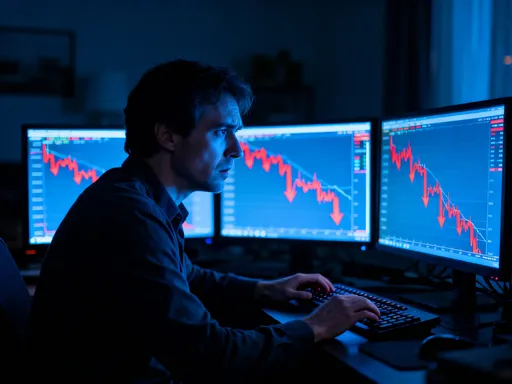
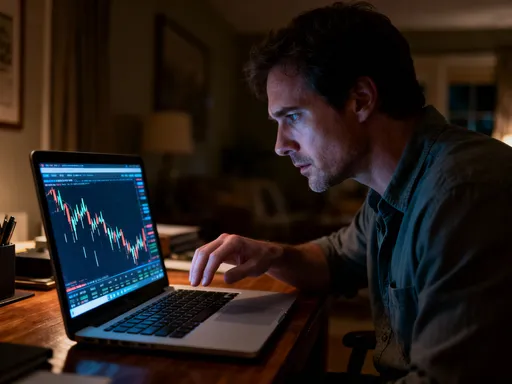
It started with a slow erosion — the kind that doesn’t scream for attention but quietly chips away at confidence. In early 2020, I noticed unusual volatility in two of my core holdings: a mid-cap tech stock and a real estate investment trust. The signs were subtle — declining earnings guidance, rising debt ratios, and a dip in trading volume that didn’t align with broader market trends. I bookmarked the reports, told myself I’d look into it “next week,” and moved on. That week turned into a month. By the time I revisited my portfolio, both assets had dropped over 30 percent. The loss wasn’t catastrophic, but it was avoidable — and that stung more than the numbers.
What made this moment a wake-up call wasn’t just the financial hit; it was the realization that I had failed my own risk protocol. I had tools in place — alerts, watchlists, quarterly review dates — but I hadn’t acted when the signals appeared. I mistook awareness for action, and that gap cost me. More importantly, I saw how delay in risk response doesn’t just preserve exposure — it compounds it. As markets reacted to pandemic uncertainty, the initial dip deepened into a correction, and my hesitation turned a manageable adjustment into a painful recovery phase.
This experience reshaped my understanding of risk. It’s not enough to know something could go wrong. The real test is whether you respond when it starts to. I began to see risk assessment not as a checklist, but as a timing mechanism — a financial reflex that needs calibration. Just like a smoke detector is useless if you ignore the alarm, spotting risk too late defeats its purpose. From that point on, I committed to closing the gap between recognition and action. The journey wasn’t about becoming more reactive; it was about becoming more precise. And precision, I learned, starts with understanding what risk really means — and why timing transforms it from theory into protection.
What Risk Assessment Really Means (And Why Timing Changes Everything)
Risk assessment, at its core, is the practice of identifying potential threats to your financial well-being before they materialize into losses. It’s not about fear or pessimism — it’s about foresight. Most people think of it as a one-time event: you evaluate your investments when you first buy them, or during annual reviews. But that static approach misses the dynamic nature of markets and personal finances. True risk assessment is ongoing, like a background scan running quietly beneath your financial decisions. It’s the difference between checking your car’s brakes once a year and noticing a strange noise the moment it appears.
Yet knowing a risk exists is only half the equation. The other half — and the more critical one — is timing your response. I’ve seen investors sell in panic during minor corrections, only to miss the rebound. I’ve also seen others hold through clear warning signs, convincing themselves “this time is different,” only to exit at the bottom. Both mistakes stem from poor timing, not poor analysis. The key insight I gained is that risk assessment isn’t just about spotting danger — it’s about choosing when to act on it. That choice determines whether you protect value or watch it erode.
Consider a friend of mine who held the same tech stock I did. When earnings dipped, she didn’t sell immediately. Instead, she reviewed her entry thesis, checked industry trends, and confirmed declining user growth. Within ten days, she reduced her position by half. She didn’t predict the full crash, but her timely reassessment saved her from the worst of the drop. Meanwhile, I waited for “more data” — and ended up reacting emotionally when the loss became too visible. Her success wasn’t due to superior knowledge; it was due to superior timing. She treated risk assessment as a process with a decision window, not an event to be postponed. That distinction changed how I approached every financial decision afterward. Risk isn’t just what you see — it’s what you do, and when you do it.
The Hidden Signals: What to Watch For Before Acting
Not all signals are created equal. In the noise of daily market updates, economic headlines, and social media commentary, it’s easy to confuse urgency with importance. The challenge isn’t in gathering information — it’s in filtering it. Over time, I’ve learned to distinguish between emotional triggers and genuine risk indicators. The first step was identifying the categories of signals that matter most: market volatility patterns, personal financial thresholds, and macroeconomic cues. These aren’t complex metrics; they’re observable trends that, when combined, create a clearer picture of emerging risk.
Market volatility, for instance, isn’t just about price swings. I now track the frequency and magnitude of intraday movements in my core holdings. A single bad day isn’t a red flag — but three consecutive sessions with wide spreads and low volume? That’s a pattern worth investigating. I also monitor sector-specific trends. If two or more companies in the same industry revise guidance downward, it’s rarely coincidence. These aren’t predictions of doom; they’re early warnings that the foundation may be shifting. I set up simple price alerts and calendar reminders to review such events within 48 hours, ensuring I don’t let them slip through the cracks.
Equally important are personal financial thresholds. I defined mine early: a 15 percent drawdown in any single holding triggers a formal review; a 10 percent drop in my emergency fund balance prompts a spending audit. These aren’t arbitrary numbers — they’re based on my risk tolerance and financial goals. When I hit one, I don’t panic; I follow a checklist. This removes emotion from the equation and creates a structured response. I also pay attention to macroeconomic cues, such as shifts in interest rate expectations, inflation data, or unemployment trends. I don’t try to time the market based on these alone, but they inform my overall posture. For example, rising bond yields might not force a sale, but they signal that capital could become more expensive — a reason to avoid over-leveraging.
Perhaps the hardest part was learning to differentiate noise from signal. A viral tweet about a company’s CEO? Noise. A regulatory investigation confirmed by official filings? Signal. The discipline I built was simple: wait for corroboration. One data point doesn’t move me; two or more aligned indicators do. This approach keeps me alert without becoming anxious. It turns risk assessment from a source of stress into a tool for confidence — because I know I’m not reacting to fear, but to facts.
The 72-Hour Rule: My Personal Risk Response Window
After my portfolio setback, I needed a system that balanced urgency with discipline. I couldn’t afford to act too fast — emotion clouds judgment — but I also couldn’t afford to wait too long. The solution I developed is what I now call the 72-hour rule: when I spot a potential risk, I allow myself 72 hours before taking any action. During this window, I gather information, consult trusted sources, and reassess my emotional state. The goal isn’t delay for its own sake; it’s to replace impulse with intention. This rule has become the cornerstone of my decision-making process, turning what was once chaotic into something structured and repeatable.
The first 24 hours are for data collection. I pull up the latest financial statements, check analyst ratings, and review news from reliable outlets. I avoid social media and commentary that amplifies fear. The next 24 hours are for consultation. I reach out to a small circle of financially savvy friends — not for permission, but for perspective. One of them is a retired accountant; another manages a small investment group. Their questions often reveal blind spots I’ve missed. The final 24 hours are for reflection. I ask myself: Does this risk challenge my original investment thesis? Is it temporary or structural? And most importantly: Am I reacting to the data, or to the fear of loss?
This process proved its worth in late 2022, when inflation spiked and interest rates rose rapidly. One of my bond funds began showing unusual outflows. Within a day, I flagged it. Instead of selling immediately, I applied the 72-hour rule. By day two, I confirmed that duration risk was increasing across the sector. By day three, I decided to reduce my position by 40 percent and shift part of it to short-term Treasury funds. Two weeks later, the market corrected sharply, and my fund dropped another 12 percent. Had I acted on day one, I might have overreacted. Had I waited beyond day three, I would have missed the optimal exit window. The 72-hour rule gave me time to think, but not so much time that I lost momentum. It’s not a magic formula — but it’s a reliable rhythm that keeps me grounded.
Balancing Speed and Caution: When to Move Fast, When to Wait
Not all risks demand the same response. One of the most important lessons I’ve learned is that risk is not monolithic — it comes in different forms, each requiring a different timing strategy. I now categorize risks into two broad types: sudden and gradual. Sudden risks — like a cybersecurity breach, a regulatory penalty, or an unexpected leadership change — require fast action. These are events that can undermine a company’s integrity overnight. In such cases, hesitation is dangerous. My rule is simple: if the risk is confirmed and material, I act within 24 hours. That doesn’t mean selling everything, but it does mean freezing new investments, reducing exposure, or hedging if possible.
Gradual risks, on the other hand, unfold over time. Think of slowing revenue growth, rising customer churn, or macroeconomic headwinds. These don’t require immediate fire drills — they call for phased adjustments. For example, when I noticed that consumer spending in a retail-heavy ETF I owned was weakening over three consecutive quarters, I didn’t sell. Instead, I reduced my position by 20 percent each quarter, using the proceeds to rebalance into more resilient sectors. This approach allowed me to respond without overcommitting to a single prediction. It also gave me room to be wrong — if the trend reversed, I could reinvest. If it continued, I’d already be protected.
Another distinction I make is between controllable and external risks. Controllable risks — like overspending, poor diversification, or inadequate emergency savings — are within my power to fix. I address these as soon as I identify them, because delay only increases their cost. External risks — such as geopolitical events or broad market corrections — are different. I can’t control them, but I can prepare for them. For these, I rely on long-term strategies like asset allocation and dollar-cost averaging, rather than trying to time exits. This framework helps me match my response speed to the nature of the threat. It prevents both paralysis and panic, ensuring that my actions are proportionate to the risk. Timing isn’t about being first — it’s about being right.
Tools That Help Me Stay Ahead Without Stress
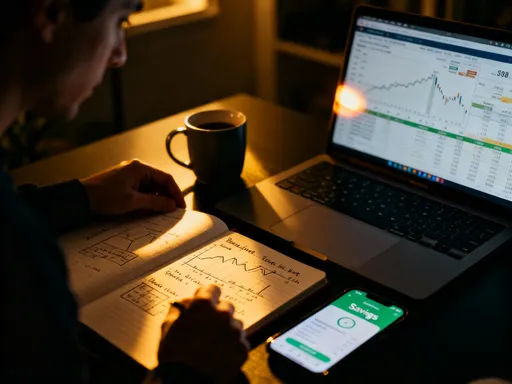
Good habits need good support. Over the years, I’ve built a simple toolkit that keeps me proactive without overwhelming me. The most important tool isn’t digital — it’s a calendar. I schedule quarterly portfolio reviews, monthly budget check-ins, and weekly market scans. These aren’t rigid deadlines; they’re reminders to pause and assess. I treat them like medical check-ups: preventive, routine, and non-negotiable. If a risk signal appears between reviews, I note it but wait for the next scheduled session unless it’s urgent. This prevents constant tinkering and reduces decision fatigue.
I also use automated alerts. Most brokerage platforms allow you to set price triggers, news alerts, and dividend notifications. I use them sparingly — only for my top five holdings and my emergency fund. Too many alerts create noise; a few well-placed ones provide clarity. For example, I get an alert if any of my stocks drop 10 percent in a day, or if my cash balance falls below three months of expenses. These aren’t action triggers — they’re invitation to investigate. I pair this with a personal risk checklist, a one-page document I keep in my finance folder. It lists my key thresholds, my 72-hour rule steps, and a short list of trusted sources. When I’m unsure, I go back to it. It’s not exhaustive, but it’s consistent.
Technology, I’ve learned, should serve me — not dominate me. I avoid complex analytics tools that promise perfect predictions. I don’t track dozens of indicators or subscribe to premium research services. Instead, I focus on a few high-quality inputs: the Federal Reserve’s economic reports, earnings calendars, and my own spending patterns. I also limit my exposure to financial news. I read one reputable source per week, not per day. This keeps me informed without feeding anxiety. The goal isn’t to know everything — it’s to know enough to act wisely. By keeping my tools simple and my routines consistent, I’ve turned risk assessment from a source of stress into a source of strength. It’s not about being perfect; it’s about being prepared.
From Reaction to Routine: Building a Timing-First Mindset
The most significant shift I’ve experienced isn’t in my portfolio — it’s in my mindset. Risk assessment used to feel like a crisis response, something I did when things went wrong. Now, it’s woven into my financial life like a daily habit. I no longer wait for alarms to sound; I listen for the quiet shifts. This didn’t happen overnight. It took repeated practice, a few more small mistakes, and a commitment to learning. But over time, the 72-hour rule, the checklists, the calendar reviews — they became second nature. I didn’t build discipline; I built routine. And routine, I’ve found, is the foundation of smart timing.
What I’ve come to value most is consistency over perfection. I don’t always act at the exact right moment. Sometimes I move a little late; sometimes I adjust too early. But because I have a process, the mistakes are smaller and the recoveries faster. More importantly, I’ve stopped seeing risk as the enemy. It’s not something to eliminate — it’s something to manage. And managing it well means protecting what I’ve worked for, not just chasing what I want. That perspective has brought a quiet confidence to my financial life. I sleep better knowing I have a system, even when markets are restless.
Looking back, I realize that the best time to act was never “someday” — it was always before the storm. Not because I could see the lightning, but because I had learned to read the clouds. Risk assessment, when timed well, isn’t about fear. It’s about respect — for your money, your goals, and your future. And for anyone who’s ever hesitated, wondering whether to act or wait, I’ll say this: the right time isn’t perfect. It’s prepared. Start small. Set one alert. Define one threshold. Build one habit. Because in the end, protecting your financial well-being isn’t about making one brilliant move — it’s about making a series of smart, timely ones. And that’s a strategy anyone can master.