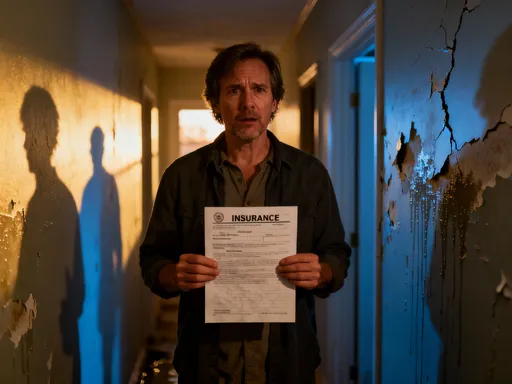
How I Found the Right Property Insurance Without Overpaying
Choosing property insurance felt overwhelming at first—so many options, confusing terms, and hidden traps. I almost picked a cheap plan that barely covered my needs. But after researching and testing different approaches, I discovered a smarter way to compare policies. This isn’t about finding the cheapest option; it’s about getting real protection that’s worth every dollar. Let me walk you through what actually works.
The Hidden Risk Most Homeowners Ignore
Many homeowners assume their property is fully protected the moment they sign a policy, but that sense of security can be misleading. Standard home insurance plans often leave significant gaps in coverage—gaps that only become visible when it’s too late. One of the most common oversights involves water damage. While sudden incidents like a burst pipe may be covered, gradual issues such as leaking faucets or seepage through basement walls are frequently excluded. These slow-building problems can lead to structural damage, mold growth, and costly repairs that homeowners end up paying for out of pocket.
Another overlooked risk is personal liability. Imagine a guest slipping on your icy front steps or a child getting injured while playing in your backyard. If a lawsuit follows, your policy’s liability coverage can mean the difference between manageable legal expenses and financial ruin. Yet many standard policies offer only the minimum liability protection, which may not be enough in today’s litigious environment. Without adequate coverage, you could be responsible for medical bills, legal fees, and settlements that far exceed your policy limits.
Damage from natural events also reveals hidden weaknesses in many policies. Standard plans typically cover windstorms and hail, but they may exclude damage caused by flooding or earthquakes—events that are becoming more frequent in certain regions. Even something as common as storm-related fence damage is sometimes treated as a separate issue, requiring additional endorsements or riders. Homeowners who don’t proactively address these exclusions may find themselves denied claims when they need help the most. These blind spots aren’t rare anomalies; they’re built into the fine print of many seemingly comprehensive policies.
The real danger lies in complacency. When everything is going well, it’s easy to treat insurance as a background expense, something to set and forget. But property insurance is not a one-size-fits-all product. Every home has unique features—age, location, construction type, and surrounding environment—that affect risk. A home near a river may face higher flood risks, while an older house with outdated wiring may be more vulnerable to fire. Failing to assess these individual factors means accepting a level of financial exposure that could jeopardize years of savings. Understanding these hidden risks is the first step toward building a protection strategy that truly matches your needs.
Why “Cheap” Insurance Can Cost You More
At first glance, a low monthly premium seems like a win—especially when you're balancing a household budget. But focusing solely on price can lead to serious financial consequences down the road. Budget-friendly policies often come with trade-offs that aren’t immediately obvious: high deductibles, narrow coverage limits, and exclusion clauses buried in the contract. These hidden conditions can turn a seemingly affordable plan into a financial burden when a claim arises. The reality is that underinsurance doesn’t save money—it shifts the cost from the insurer to you.
Consider a scenario where a storm damages your roof. A cheaper policy might cover the claim, but only up to a certain amount, or it may apply a higher deductible than expected. If your deductible is $2,500 and the repair costs $8,000, you’re still on the hook for more than half the bill. Worse, some low-cost plans use actual cash value (ACV) instead of replacement cost coverage. This means they pay based on the depreciated value of your damaged property, not what it would cost to replace it today. For older homes or high-cost materials, that difference can be thousands of dollars.
Another common pitfall is the denial of claims due to vague policy language. Many budget insurers include clauses that exclude damage labeled as “wear and tear” or “lack of maintenance.” A roof that leaks after 15 years might be deemed insufficiently maintained, even if regular inspections were done. Similarly, water damage from a sump pump failure may not be covered unless you’ve added a specific endorsement. These exclusions are often not highlighted during the sales process, leaving homeowners shocked when their claim is denied.
The long-term cost of choosing cheap insurance becomes clear when you compare outcomes, not premiums. A slightly higher monthly payment on a comprehensive plan can prevent six-figure losses after a major event. Think of it like buying a reliable car—you wouldn’t choose the cheapest model if it breaks down every few months. The same logic applies to insurance. Value isn’t measured by the lowest price, but by the level of protection and peace of mind it provides. Shifting from a cost-first to a value-first mindset helps ensure that when disaster strikes, your policy is there to support you, not leave you scrambling for funds.
What to Look for in a Policy (Beyond the Price Tag)
When evaluating property insurance, the headline price is just the beginning. The real value lies in the details of what the policy actually covers. One of the most important elements is dwelling coverage—the amount the insurer will pay to rebuild your home if it’s destroyed. This number should reflect current construction costs in your area, not the market value of your home or what you originally paid for it. In regions where building materials and labor costs have risen, underestimating this amount can leave you underinsured, even if you think you have adequate coverage.
Equally important is personal property protection. This covers your belongings—furniture, electronics, clothing, and more—in case of theft, fire, or other covered events. Some policies offer replacement cost coverage for personal items, meaning you’ll be reimbursed for what it takes to buy new items, not what they were worth when they were damaged. Others use actual cash value, which factors in depreciation and often results in much lower payouts. For households with significant investments in appliances, home offices, or valuables, this distinction can have a major financial impact.
Liability coverage is another critical component. Most standard policies start at $100,000 in liability protection, but experts often recommend at least $300,000—and even higher for homeowners with pools, trampolines, or frequent guests. This coverage applies not just to injuries on your property, but also to incidents caused by family members off-site, such as a child accidentally damaging a neighbor’s property. Without enough liability protection, you could be personally responsible for costs that exceed your policy limit.
Additional living expenses (ALE) is a feature that many overlook until they need it. If your home becomes uninhabitable due to a covered event, ALE covers temporary housing, meals, and other essential costs while repairs are underway. Policies vary widely in how much they pay and for how long. Some cap it at 20% of dwelling coverage, while others offer more generous terms. In high-cost areas, even a short displacement can lead to significant expenses, making this coverage a crucial part of financial resilience. Reading the policy carefully—and asking questions—helps ensure you understand exactly what’s included and where gaps might exist.
How I Compared Providers—and What Actually Worked
Comparing insurance providers felt overwhelming at first. Each company presented its plans with polished websites, confident slogans, and promises of fast claims. But beneath the surface, the differences in service, reliability, and policy details were significant. To cut through the noise, I developed a structured approach that focused on three key factors: financial strength, customer experience, and transparency in policy terms. These criteria helped me move beyond marketing and assess which insurers could truly deliver when it mattered most.
Financial strength ratings from agencies like AM Best, Moody’s, and Standard & Poor’s provided an objective starting point. These ratings reflect an insurer’s ability to pay claims, even during widespread disasters like hurricanes or wildfires. A company with an A+ or higher rating from AM Best is more likely to remain solvent and responsive when large numbers of policyholders file claims. This stability is especially important for long-term protection—insurance isn’t just about the next 12 months, but the next decade or more.
Customer reviews were another essential tool, particularly those focused on claims experiences. While general satisfaction scores are helpful, the real test is how an insurer handles a claim. I looked for patterns in feedback: Were claims processed quickly? Did customers feel treated fairly? Were there frequent complaints about denied claims or poor communication? Reading through detailed reviews on trusted platforms helped me identify insurers with consistent service and those with recurring issues. One company, for example, had competitive rates but a high number of complaints about delayed payments after storm damage—a red flag I couldn’t ignore.
I also tested responsiveness by calling and emailing multiple providers with the same set of questions. How quickly did they reply? Did the agent explain coverage clearly, or use confusing jargon? One insurer responded within two hours with a detailed breakdown of policy options, while another took three days and offered only a generic brochure. These small interactions revealed a lot about the level of support I could expect. Ultimately, the most effective comparison came from combining objective data with real-world experiences, allowing me to choose a provider that balanced affordability, reliability, and clarity.
The Role of Bundling and Discounts (And When to Skip Them)
Bundling home and auto insurance is one of the most heavily promoted strategies in the industry, often advertised as an easy way to save 15% or more. And in many cases, it does deliver savings. But bundling isn’t automatically the best choice for everyone. The key is to evaluate the total value of the package, not just the discount percentage. Sometimes, bundling locks you into a home policy that’s weaker or more expensive than what you could get elsewhere, even after the discount is applied.
To determine whether bundling made sense, I compared the combined price of a bundled plan with the cost of buying home and auto insurance separately from different providers. In one case, bundling saved me $280 a year. But when I reviewed the home coverage details, I found that the bundled policy had a lower liability limit and excluded certain types of water damage. To get equivalent protection elsewhere, I would have had to pay more—but the standalone policy offered better terms and faster claims service. The apparent savings were offset by reduced value.
Other discounts also require careful evaluation. Common offers include reductions for installing security systems, having a newer home, or being claims-free for several years. While these can lower premiums, it’s important to verify whether the discount is worth the investment. For example, a 5% discount for a home security system may not justify the cost of installation if the system itself is expensive. Similarly, loyalty discounts often increase slowly over time, while new customer promotions can be more generous. It’s worth asking your insurer annually whether you’re getting the best available rate, not just the one you’ve had for years.
The bottom line is that discounts should enhance value, not replace it. A 20% reduction on an inadequate policy still leaves you underprotected. The smarter approach is to first identify the coverage you truly need, then look for ways to reduce costs without sacrificing protection. That way, every dollar saved supports, rather than undermines, your long-term financial security.
Working with Agents vs. Buying Online: A Balanced Approach
The rise of online insurance platforms has made it easier than ever to get quotes and purchase coverage with just a few clicks. The speed and convenience are undeniable—no appointments, no phone calls, just instant comparisons. For straightforward cases, buying online can be efficient and cost-effective. But my experience showed that digital tools alone aren’t always enough to catch important details. That’s where a qualified insurance agent can make a real difference.
During one comparison, I used an online portal to generate a quote for a home policy. The process was fast, and the price seemed competitive. But when I scheduled a 20-minute call with an agent from the same company, they asked questions the online form hadn’t covered: had I renovated the kitchen? Was the roof over 10 years old? Did I work from home with expensive equipment? These details affected my risk profile and, ultimately, my coverage needs. The agent identified that my home office equipment wasn’t fully covered under the standard policy and recommended an endorsement to protect it—an option the online tool had completely missed.
Agents also provide clarity on complex terms. When I asked about “ordinance or law” coverage—an add-on that pays for upgrades required by local building codes after a repair—the online platform offered no explanation. The agent, however, walked me through real examples, like how replacing a damaged roof might require adding insulation to meet current standards, a cost that could run into thousands of dollars. Without this coverage, I’d be responsible for the difference. These insights transformed my understanding of what “full protection” really means.
That said, I didn’t abandon online tools. They remain valuable for gathering initial quotes and comparing prices across multiple companies. My strategy became a hybrid one: use online platforms to narrow the field, then consult with agents to review the shortlisted options in depth. This balanced approach combined efficiency with expertise, ensuring I didn’t miss critical details while still saving time. For busy households, especially those managing multiple responsibilities, this method offers both convenience and confidence.
Building a Long-Term Protection Strategy
Property insurance isn’t a one-time decision—it’s an ongoing part of financial planning. Life changes, markets shift, and homes evolve, all of which affect your coverage needs. A policy that made sense five years ago may no longer be sufficient today. That’s why establishing a habit of annual review is essential. Every year, I take time to reassess my coverage in light of renovations, market trends, and personal circumstances. Did I finish a basement remodel? Did construction costs rise in my area? Have I acquired high-value items like jewelry or artwork? Each of these factors can impact the level of protection I need.
Market conditions also play a role. In periods of high inflation or material shortages, rebuilding costs can increase significantly. A dwelling coverage limit that once matched local construction prices may now fall short. Some insurers offer inflation guard clauses that automatically adjust coverage to keep pace with rising costs, but not all do. Being proactive about these changes helps prevent underinsurance, which remains one of the most common and costly mistakes homeowners make.
Life events are another trigger for policy updates. A growing family, a home-based business, or even getting a dog can alter your risk profile. Each of these may require additional liability coverage or specific endorsements. Similarly, as children move out or retirement approaches, your needs may shift toward estate planning and legacy protection. Integrating property insurance into a broader financial strategy—alongside emergency savings, wills, and healthcare planning—creates a more complete safety net.
Ultimately, the goal isn’t perfection. It’s progress. You don’t need to have every detail figured out on day one. What matters is staying informed, asking questions, and making thoughtful adjustments over time. Smart insurance choices aren’t about finding a flawless policy—they’re about building awareness, reducing risk, and gaining peace of mind. When you approach coverage as a long-term commitment rather than a transaction, you protect not just your home, but your family’s financial future.